14 September 2026
How to Prepare for the Autumn Season in the Bedding Industry
Autumn is one of the most important transition periods for the bedding industry. As temperatures begin to fall, consumers naturally rethink what they sleep with. Lightweight summer duvets are replaced by warmer options, breathable sheets give way to more insulating fabrics, and products designed around warmth, comfort and better temperature regulation become more relevant.
For retailers, wholesalers and bedding brands, however, autumn starts much earlier than the first cold night. It starts with forecasting demand, reviewing the product assortment, checking stock levels, coordinating with suppliers and making sure the right products can reach warehouses and stores at the right moment.
At Immoricon, we work closely with manufacturers and buyers across the bedding and textile supply chain. One thing experience teaches quickly is that seasonal sourcing works best when businesses prepare for demand rather than react to it.
Here is what bedding businesses should be thinking about as the autumn season approaches.
Autumn Is a Commercial Transition, Not Just a Weather Change
The move from summer to autumn changes the way consumers evaluate bedding. During warmer months, breathability, lightweight construction and cooling properties often dominate purchasing decisions. Once nights become cooler, priorities gradually move towards insulation, warmth and comfort. This creates an important transition period for bedding companies. Jumping immediately from summer products to the heaviest winter range can leave a gap in the assortment. Consumers often need something between the two.
For duvets, for example, transitional products commonly sit between lightweight summer and heavier winter options. The precise specification naturally depends on the market. Autumn in Sweden is very different from autumn in Greece. That is why seasonal sourcing decisions should begin with the destination market rather than with a standard catalogue.
Understanding local climate, consumer habits, housing conditions and price expectations gives buyers a much stronger starting point for deciding what should actually be ordered.
Start With Last Season's Data
Before deciding what to source for the coming months, look backwards. Which duvet weights sold fastest last autumn? Which pillow constructions generated repeat purchases? Which products remained in the warehouse after winter? Which sizes sold out earlier than expected? These questions help transform seasonal purchasing from estimation into forecasting.
Businesses should also look beyond total sales figures. Analyse the timing of demand. If warmer duvets consistently begin moving several weeks before the coldest weather arrives, waiting for temperatures to drop before replenishing stock will already put the business behind the market.
This becomes particularly important when sourcing internationally. Production capacity, raw materials, custom packaging, quality inspections and transportation all need to fit into the timeline.
At Immoricon, we generally encourage buyers to work backwards from the date products need to be available to customers. Once that date is clear, sourcing, sampling, manufacturing, inspection and delivery can be planned around it. The objective is simple: your autumn collection should arrive before consumers begin actively looking for it.
Build a Bedding Range Around Transitional Comfort
One of the biggest mistakes in seasonal bedding sourcing is thinking only in terms of "summer" and "winter." Autumn sits between those extremes.
Consumers may want more insulation without the weight of a full winter duvet. They may prefer sheets and covers that feel warmer while still remaining breathable. And they may begin paying greater attention to products that help maintain a comfortable sleeping temperature as conditions fluctuate from one week to another. That makes versatile products particularly valuable.
For duvets, consider different filling weights or four-season constructions. For pillows, focus on materials and constructions that balance breathability with comfort. For bed linen, fabric weight, weave, softness and moisture management become important considerations. Natural fibres such as cotton and wool can play an important role, while modern microfibres and other synthetic constructions can offer cost-effective alternatives for mass-market ranges.
There is no single material that works for every buyer. The right choice depends on the intended retail price, customer expectations, climate, positioning and required performance. This is why we recommend sourcing backwards from the desired product rather than choosing a material first and attempting to build a product around it.

Think Beyond Warmth When Choosing Materials
When temperatures fall, warmth receives most of the attention. But good autumn bedding needs to do more than simply trap heat. Moisture management, breathability, weight, washability and durability still matter.
A duvet that feels excessively heavy or traps too much heat may be uncomfortable during transitional weather. Similarly, a fabric that feels luxurious in the showroom but performs poorly after repeated washing can quickly become a problem for the retailer.
This is where specification becomes essential.
Buyers should consider fill material and weight, fabric composition, thread construction, stitching quality, filling distribution, washing requirements and dimensional stability.
For mattresses and mattress components, the same principle applies. Foam density, spring systems, covers, quilting materials and breathability all contribute to the finished product's performance.
A strong sourcing partner should therefore help you compare specifications rather than simply compare unit prices. Because two products that look nearly identical on a quotation can perform very differently after six months of use.
Use Autumn to Strengthen Your Core Product Range
Seasonal planning does not necessarily mean replacing your entire catalogue. Often, the smarter approach is to strengthen the core range. Think about products that can remain relevant throughout autumn and continue selling into winter: medium-to-warm duvets, adaptable pillows, mattress protectors, fitted sheets, duvet covers and bedding sets in materials suitable for cooler conditions.
This creates a smoother inventory cycle and reduces dependence on products with extremely short selling windows. It is particularly important given the scale of textile consumption and waste in Europe.
According to the European Environment Agency, EU consumers purchased an average of 19 kg of clothing, footwear and household textiles per person in 2022, compared with 17 kg in 2019. Of that amount, around 7 kg per person consisted of household textiles.
At the same time, the EEA estimates that around 4–9% of textile products placed on the European market are destroyed before ever being used for their intended purpose.
For bedding companies, better seasonal forecasting therefore has implications beyond profitability. More accurate purchasing can reduce excessive inventory, discounting and unnecessary waste.
Make Durability Part of Your Autumn Buying Strategy
As competition increases, product lifespan is becoming increasingly important. European policy is also moving towards a textile economy built around products that are more durable, reusable, repairable and recyclable. The European Commission's Strategy for Sustainable and Circular Textiles reflects this broader direction. The environmental numbers explain why.
The European Environment Agency estimates that textile products consumed in the EU in 2022 were responsible for around 159 million tonnes of CO₂-equivalent emissions, or approximately 355 kg per person.
For buyers, sustainability therefore should not be treated simply as a marketing claim printed on packaging. Product longevity matters.
A duvet that maintains filling distribution after repeated washing, a pillow that retains its shape and a mattress cover that continues performing after years of use all create more value than products designed primarily around the lowest possible initial cost. They can also mean fewer complaints, fewer returns and stronger customer trust.
Check Certifications and Compliance Before Increasing Orders
Seasonal pressure should never become an excuse for skipping compliance checks. This is particularly important for companies selling into European markets.
Textile products sold in the EU are subject to fibre-composition labelling requirements. Products covered by the rules must clearly identify their textile fibre composition, and companies selling across different EU countries also need to consider the required languages for consumer-facing information.
Buyers should therefore confirm specifications, labels and documentation before mass production begins. Third-party standards can provide another layer of assurance.
For example, OEKO-TEX® STANDARD 100 covers textiles tested for harmful substances. The organisation states that certified articles are tested against a list of more than 1,000 potentially harmful substances, with stricter requirements applying to products involving greater skin contact. Bed linen falls under its Product Class 2 for direct skin contact.
For bedding brands, these checks should be built into sourcing decisions early rather than added just before shipping. Changing labels, materials or packaging after production has started is usually far more expensive than confirming requirements during product development.

Prepare Your Supply Chain Before Demand Peaks
Autumn sourcing is ultimately a timing exercise. A perfect product arriving six weeks late is no longer the perfect product. Before placing seasonal orders, businesses should confirm manufacturing capacity, minimum order quantities, raw-material availability, sampling schedules, quality-control procedures, packaging requirements and transportation times. This is also where sourcing closer to the final market can become valuable.
European buyers have traditionally depended heavily on long-distance textile supply chains. In 2022 alone, the EU imported approximately 11 million tonnes of textile products, with household textiles accounting for about 21% of those imports. China, Bangladesh and Turkey were among the main origins. For some companies, diversifying the supplier base and exploring manufacturers closer to European customers can improve flexibility.
North Macedonia and the wider Balkan region can be particularly interesting in this context. Shorter transport distances, easier communication with manufacturers, greater visibility into production and the ability to work with more flexible quantities can help buyers react faster when seasonal demand changes. At Immoricon, this is one of the areas where we see considerable opportunity for European bedding companies.
Do Not Let Price Become the Only Sourcing Metric
Autumn collections often create pressure to secure inventory quickly and protect margins. That can make unit price the easiest number to compare. But the cheapest quotation does not necessarily create the lowest total cost.
Late delivery, inconsistent filling, incorrect dimensions, poor stitching, packaging mistakes or high defect rates can quickly eliminate the savings achieved during negotiation.
A better sourcing calculation includes the complete commercial picture: product cost, transportation, lead time, minimum order quantity, defect risk, quality consistency and the supplier's ability to respond when something changes.
For seasonal products, flexibility itself has value. Being able to replenish 100 units quickly may sometimes be more profitable than securing a lower price on 1,000 units that may still be sitting in the warehouse in spring.
Autumn Success Starts Before Autumn
The bedding industry will always be influenced by seasons, but successful seasonal sourcing should never depend on last-minute decisions. Preparation means understanding your market first, studying previous demand, selecting appropriate materials and filling weights, confirming compliance, testing product quality and securing manufacturing capacity before the seasonal rush begins.
It also means thinking beyond one shipment.
The strongest supplier relationships are built around consistency. When buyers and manufacturers understand each other's specifications, expectations and timelines, seasonal planning becomes faster and considerably less risky.
At Immoricon, we help retailers, wholesalers, e-commerce companies and bedding brands connect with verified manufacturers across North Macedonia and the Balkans for mattresses, pillows, duvets, bedding and bedding components.
From supplier selection and product specifications to sampling, production coordination and quality control, our role is to make the sourcing process simpler and more predictable. Because by the time your customers start thinking about colder nights, your autumn bedding strategy should already be in place.
Preparing your next autumn or winter collection? Contact Immoricon and let us help you find the right manufacturing partner for your market.
Get in touch with us today
Related News
10 June 2026
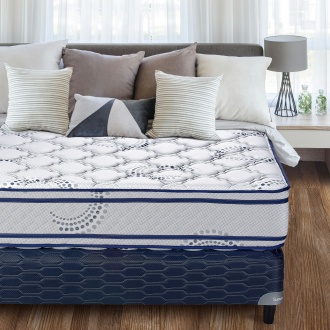
How to Choose the Best Products from the Sleeping Industry: Pillows, Mattresses, Bedding and Duvets
Consumers today are no longer buying a pillow or duvet simply because they need one. They are looking for better sleep, healthier materials, sustainability credentials, and products that fit their lifestyle. Choosing the right sleeping products does not revolve aboud price only. It is about understanding your market, selecting the right materials, and building a product portfolio that customers trust.
Read More...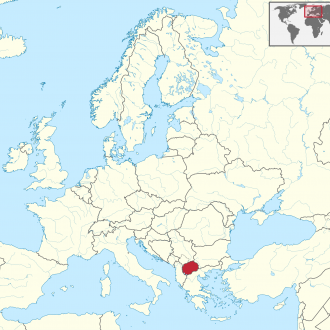
11 May 2026
Complete Guide to Sourcing Textile Products from North Macedonia
At Immoricon, we have seen firsthand how international buyers are becoming more interested in sourcing bedding and textile products from the Balkans, especially pillows, duvets, mattresses, mattress toppers, and home textile products. So if you are exploring sourcing opportunities in Europe, here is what you should know about North Macedonia and why more buyers are starting to pay attention to it.
Read More...